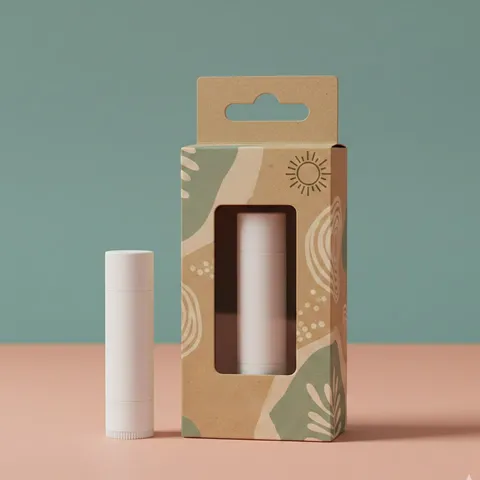
This page covers one thing: buyer meetings and physical sample requirements. For the wider view, read lip packaging across Illinois.
Meetings decided by physical samples
Chicago hosts a concentration of buying offices and industry events, and the consequence for a brand is that a lot of commercial outcomes turn on what you can hand across a table.
A render does not survive that context. A buyer picks a pack up, feels its weight, opens it, and forms a view in a few seconds. A artwork and proofing guidelines laid flat on a table communicates almost nothing by comparison.
Planning for that means producing physical samples earlier than a purely production-driven schedule would, and treating them as a commercial cost rather than an engineering one.
Which sample suits which meeting
Three different objects, frequently confused with each other.
- A plain structural sample: cut and creased in the specified board, no print. Shows proportion and fit, not appearance
- A printed proof: shows colour on the actual stock. Flat, so it shows nothing about the object
- A production-standard sample: printed, finished and assembled. The only one that represents the finished pack
- A white rigid sample: unprinted but assembled, showing lid fit, magnet strength and the opening action
- Material swatches: how a board or <a href="/finishes/">lamination and finish options</a> feels, useful early when the specification is still open
- A mocked-up shelf set: several units together, which is what a buyer is actually deciding about
For a buyer meeting the production-standard sample is the one that matters. The others are internal tools.
Producing samples before you are ready to produce
The tension is that a production-standard sample requires the specification to be settled, and a buyer meeting often happens before you want to settle it.
The workable sequence is to fix the structure early, produce a plain structural sample, and use a printed proof alongside it so the buyer can see both the object and the colour even though they are separate pieces. It is not as persuasive as a finished pack but it is far better than a render.
Where a listing depends on the meeting, it is usually worth committing to the specification and producing a small number of finished samples. The sequence is covered in the sampling and approval steps.
Common Chicago queries
What sample should I take to a buyer meeting?
A production-standard sample: printed, finished and assembled. It is the only one that represents the finished pack. Structural samples and flat printed proofs are internal tools and communicate very little across a table.
What is the difference between a proof and a sample?
A proof confirms colour and is usually flat, so it shows nothing about the object. A structural sample confirms fit and proportion but carries no print. Only a production-standard sample shows both together.
Can I get samples before finalising the specification?
A plain structural sample, yes, at any point after the die line is drawn. A production-standard sample requires the specification to be settled, because it is made the way the run will be made.
What if the meeting is before I want to commit?
Fix the structure early, take a structural sample and a printed proof together, and explain that they are separate pieces. It is less persuasive than a finished pack but considerably better than showing a render.
Should I show several units or one?
Several, if the product is a range. A buyer is deciding about a shelf set rather than a single pack, and seeing three or four shades together answers questions about differentiation that one unit cannot.
Are material swatches useful in a meeting?
Early on, yes, when the specification is still open and you want a view on direction. Once you are asking for a listing, a swatch is a distraction from the finished object the buyer is actually assessing.
How does this differ from your Illinois page?
The Illinois page covers supplying mass retail, where planogram resets fix the delivery date and fixture specifications constrain the pack. This page is about the sample requirements of the buyer meetings that happen before any of that.
Are you based in Chicago?
No. The business has no premises in Chicago and no local team. What it does have is a nationwide delivery service that reaches every Chicago address.
Lip Boxes has no address, warehouse, collection point or staff in Chicago. Packaging is manufactured to order and shipped to Chicago addresses through a nationwide carrier service, with delivery cost and lead time confirmed in writing on each quote.