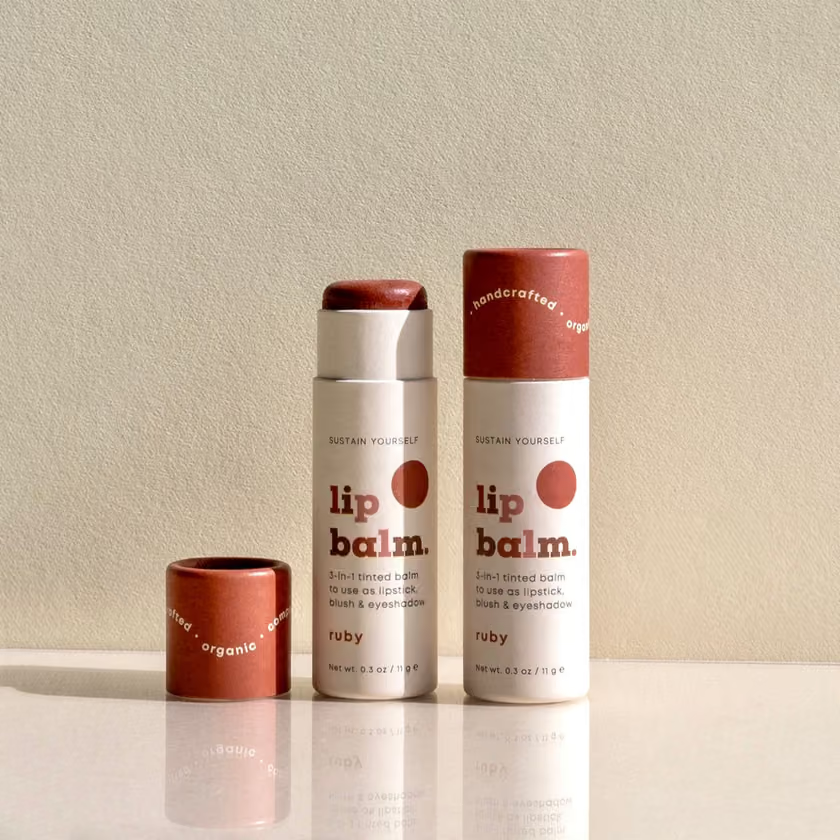


Lip Balm packaging
Paper Lip Balm Tubes
Plastic-free paperboard tubes with a push-up base, printed in kraft or full colour and made to the fill capacity your formula needs.
- Rigid rolled paperboard, no plastic component in the tube body
- Push-up base disc raises the balm as the base is turned or pushed
- Kraft, printed wrap or full-colour label finishes
Price starts from $0.30 per piece for large-volume orders. Final pricing depends on size, material, printing, and quantity.
The starting figure applies to qualifying large-volume custom orders. It is not a fixed price for every quantity, and your written quote will state the actual unit price for your job.
Get a price for this box
Four fields. We reply with a written price for your quantity, or with the questions we need answered first.
How a paper lip balm tube is built
A paper lip balm tube is a rolled paperboard cylinder with a friction-fit cap and a disc in the base that pushes the balm upward as it is turned or pressed. There is no plastic mechanism inside, which is the whole point of the format for brands moving away from petroleum-based packaging. The trade-off is that a paper tube behaves differently from a plastic twist-up, and both you and your customers need to know that before launch.
The body is usually a three-layer construction: an outer printed or kraft ply, a structural middle ply, and an inner liner that sits against the balm. The liner is what stops oil migrating into the board and darkening it. Ask about liner specification early, because a balm high in liquid oils needs more barrier than a firm beeswax formula does.
This page covers the format decorated: printed in full colour or in spot colours for retail lines. The same construction supplied plain or in unbleached kraft for small-batch work is covered separately, because the buying decision and the order size are different.
Paper tubes compared with plastic twist-up tubes
Neither format is universally better. Which one suits you depends on your formula, your price point and how your customers will store the product.
| Option | Paper tube | Plastic twist-up |
|---|---|---|
| Mechanism | Push-up disc in the base, moved by hand | Threaded screw elevator |
| Retraction | The balm cannot be wound back down | Winds up and down freely |
| Heat behaviour | Softened balm can seep into the board if left in a hot car | Contained by the plastic barrel |
| Surface | Prints directly, no separate label needed | Usually needs a printed wrap label |
| Disposal | Paper stream once the liner is accounted for | Mixed plastic, rarely recycled in practice |
| Feel | Warm, matte, textured | Smooth, uniform, glossy |
If you want the same construction left unbleached and undecorated for a low-waste line, that is covered on our natural kraft tube page.
Capacities and dimensions
Tubes are quoted by internal diameter, body height and fill capacity. The common formats sit in these ranges, and other sizes are made to order.
- 0.15 oz / 4.25 g — the standard lip balm stick, roughly 0.65 in diameter
- 0.3 oz / 8.5 g — a taller lip balm format with more shelf presence
- 0.5 oz / 14 g — a wider stick, often used for lip and cheek multi-use balms
- 1 oz / 28 g and above — body balm and sunstick formats on the same construction
- Cap depth and friction fit set to your preference for a tight or an easy pull
- Body wall thickness selected against the fill weight and how firm the balm sets
Send the capacity in grams or ounces rather than only in fluid measure, since balm density varies enough to change which tube actually holds your fill.
Board and liner materials
The outer ply is either natural kraft, which shows fibre and prints warm, or a white-lined board that carries bright full-colour artwork. Kraft is the more common choice because the format already signals a low-waste product and the brown body reinforces that read.
The inner liner is the specification that most affects performance. A standard grease-resistant liner handles firm beeswax and butter formulas. Balms that are high in liquid oils, or that are poured warm and stay soft, need a heavier barrier. Tell us the fill temperature and the oil content in your quote request so the right liner goes into the build.
Base discs are supplied in matching board. Caps are paperboard as standard, and a paper cap is what keeps the tube fully plastic-free — check before assuming, because some suppliers pair a paper body with a plastic cap and still describe the pack as plastic-free.
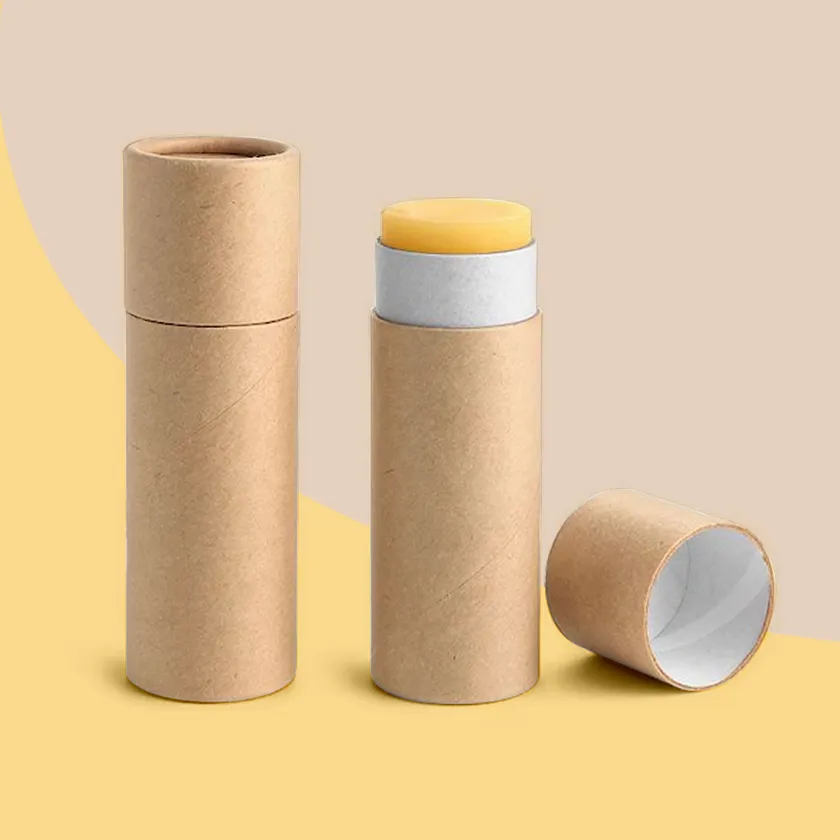
Printing and decoration on a curved paper surface
A tube is printed flat and then rolled, so artwork has to be laid out with the seam and the wrap-around in mind.
Direct print to kraft
One or two spot colours printed straight onto the brown board. Cheapest at volume and the most honest look for an unbleached pack.
Full-colour on white board
CMYK process print for photographic or illustrated artwork. Colours hold their intended values because the substrate is white.
Printed wrap label
A separate label applied over a plain tube. Useful when one tube stock serves several shades or scents.
Foil stamping
Possible on the flat sheet before rolling. Keep foil away from the seam line so the join does not interrupt the metallic area.
Matte or satin varnish
Protects print from handling without adding a plastic laminate film to the recycling stream.
Debossing
A subtle recessed mark in the board. Works on kraft where ink alone can look flat.
Preparing artwork for a rolled tube
Tube artwork is supplied as a flat rectangle that becomes a cylinder. The critical measurement is circumference, not width, and there is an overlap where the two edges meet. Any element that crosses the seam will show a small step, so logos and legal panels should sit clear of it.
Text also curves away from the viewer. Anything longer than about a third of the circumference becomes hard to read from a single angle, which is why ingredient panels on tubes are usually set in a narrow column rather than across the full wrap. Type below 6 pt is difficult to hold cleanly on uncoated kraft.
We supply a flat template with the seam position, the safe area and the wrap allowance marked before you start laying out. The general file requirements for resolution, colour space and bleed are the same as for cartons and are set out in the file setup requirements for print.
Filling, sealing and shelf behaviour
Paper tubes are filled from the top with the base disc already seated. Pour temperature matters more than it does with plastic: too hot and the balm soaks into the liner edge, too cool and it sets before it levels. Most fillers settle on a pour a few degrees above set point and let the tubes cool upright and undisturbed.
A shrink band or a printed paper safety seal around the cap join gives visible tamper evidence and stops the cap working loose in transit. Retail buyers frequently ask for one. Tell your customers that the balm cannot be retracted once pushed up, because that single expectation causes most of the negative feedback this format receives.
Store filled stock cool and out of direct sun. Paper tubes are more sensitive to heat than plastic, and a pallet left in a hot warehouse will show it.
Quantity, tooling and unit price
Paper tubes are tooled to a diameter, so the first order in a new diameter carries a setup that repeat orders in that same diameter do not. Sticking to one diameter across a range of shades keeps your costs down considerably, with the artwork doing the differentiating.
Price starts from $0.30 per piece for large-volume orders. Final pricing depends on size, material, printing, and quantity. On this format the specific drivers are tube diameter and height, the liner grade, the number of print colours and whether the cap is printed as well as the body. A short first run in a new diameter will sit above the starting figure.
Wholesale and repeat scheduled orders are quoted against a held specification, so a brand running four scents on one tube size can reorder any of them without repeating setup work.
From enquiry to delivered tubes
Tell us the fill
Capacity in grams, oil content, pour temperature and whether the balm sets firm or soft. This decides diameter and liner grade.
Confirm diameter and height
We propose a tube geometry that holds your fill and send the flat artwork template for that size.
Approve print proof
A proof on the actual board shows how the colours read on kraft or white. Written approval releases the run.
Production and assembly
Sheets are printed, varnished, rolled, cut to height and assembled with base discs and caps.
Packing and dispatch
Tubes are supplied capped and nested in counted cases, ready for your filling line.
Quality control and end-of-life
Assembled tubes are checked for concentricity, cap retention force and base disc travel. A tube that is out of round will not accept a cap consistently, and a base disc that binds gives the customer an unpleasant first use, so both are sampled through the run rather than only at the start.
On disposal: the board itself belongs in the paper stream, and the liner is the variable. Some liner grades are compatible with standard paper recycling and some are not, and that varies by municipality as much as by material. We will tell you exactly which liner is quoted on your job so you can describe it accurately on pack, rather than making a broad environmental claim on your behalf.
Lead time and delivery
Rolled tubes take longer to produce than flat cartons because rolling, curing and assembly are separate stages. A first order in a new diameter also carries tooling time. We confirm the production window in writing once the specification is fixed.
Shipping is to addresses across the United States. Tubes are light but bulky, so freight cost is driven by volume rather than weight, and consolidating a larger order into one shipment usually costs less than several smaller ones. Delivery methods and how packing is handled are covered on the delivery and freight page.
Paper Lip Balm Tubes specification
A summary of what can be specified on this product. Anything marked as quoted or made to order is confirmed in writing before production.
| Product type | Rolled paperboard push-up tube for lip and body balm |
|---|---|
| Construction | Multi-ply paperboard body, inner liner, base disc, friction-fit cap |
| Common capacities | 0.15 oz, 0.3 oz, 0.5 oz, 1 oz; other sizes tooled to order |
| Typical diameter | From approximately 0.65 in for a standard lip balm stick |
| Outer materials | Natural kraft or white-lined paperboard |
| Liner options | Grease-resistant standard and heavy-barrier grades |
| Caps | Paperboard as standard; specify if a different material is required |
| Printing | Spot colour direct to kraft, CMYK on white board, applied wrap label |
| Decoration | Matte or satin varnish, foil stamp, deboss |
| Tamper evidence | Printed paper seal or shrink band around the cap join |
| Artwork format | Flat wrap template supplied; PDF, AI or EPS at 300 dpi |
| Starting unit price | From $0.30 per piece on qualifying large-volume orders |
| Ordering | Quote based, tooled per diameter |
Paper Lip Balm Tubes: common questions
Answers to the questions we are asked most often about this product. If yours is not here, put it in the enquiry form and we will answer it directly.
Does the balm push back down again like a plastic twist-up?
No. The base disc travels upward only. Once balm is raised it stays raised, so the user pushes up a small amount at a time. It is worth saying this on the pack or in your product description, because customers who expect a retracting mechanism are the main source of complaints about this format.
Will the oil in my balm soak into the cardboard?
Not through a correctly specified liner. Migration happens when the liner grade is too light for a high-oil formula, or when the balm is poured hot enough to wick past the liner edge. Send your oil percentage and pour temperature with the enquiry and the liner is matched to it.
Are these tubes completely plastic-free?
The body, base disc and standard cap are all paperboard, so the tube itself contains no plastic. The liner is a coating rather than a separate plastic sleeve, and its exact composition depends on the grade specified. We will confirm the liner on your quote so any plastic-free wording you use on pack is accurate.
What happens if the tube gets hot in a car or a mailbox?
Paperboard offers less thermal protection than a plastic barrel. A softened balm can settle or seep slightly at the liner edge. Firmer formulas with a higher wax ratio hold up much better in this format, and it is worth testing your specific recipe in a sample tube before committing to a run.
Can I print the cap as well as the body?
Yes. Caps are printed as a separate component, most often in a single spot colour or in a solid that matches the body. A printed cap adds a step and a cost, so many brands leave the cap in plain kraft and put the artwork budget into the body.
How do I know which diameter to order?
Work from your fill weight rather than your current tube. Tell us the grams of balm per unit and how firm it sets, and we will propose a diameter and height that hold it with sensible headspace. If you are matching an existing pack, send a sample and we will measure it.
Can one tube size carry several different scents?
Yes, and it is the most economical way to run a range. Keep one diameter and height across the line and change only the printed artwork or the applied wrap label. That way the tooling cost is carried once rather than per variant.
Do you supply a tamper-evident seal?
A printed paper seal band or a clear shrink band can be supplied to run around the cap join. Retail buyers often require one. If you plan to apply the seal yourself, tell us so the cap and body tolerances suit whichever applicator you are using.
Is the artwork template different from a flat box template?
Yes. A tube template is a rectangle whose width is the circumference plus a seam overlap, not a folding die line. Elements crossing the seam show a small step, so we mark the seam position and the safe area on the template we send you.
Can you match a specific Pantone on kraft board?
Approximately, not exactly. Ink on unbleached kraft picks up the brown of the substrate, so every colour reads warmer and darker than the Pantone chip. A white underprint gets closer but changes the uncoated look. Ask for a proof on the actual board before signing off if the colour is central to your brand.
How are the tubes packed for shipping?
Capped, nested and counted into cases with a case count noted on each carton. Because tubes are bulky relative to their weight, freight is charged on volume, so ordering in fewer larger consignments generally reduces your delivered cost.
Can I get a sample tube to test my formula in?
Yes, and it is worth doing before a first run. An unprinted sample in the proposed diameter lets you check fill behaviour, set-up time and how the base disc travels once the balm has hardened. Request one through the sample kit page and say which capacity you want to test.
Other formats brands pair with this
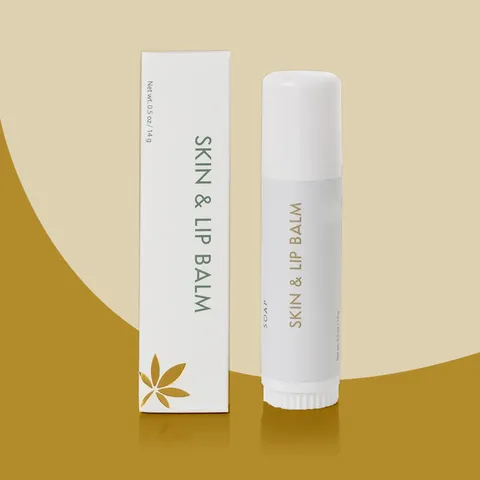
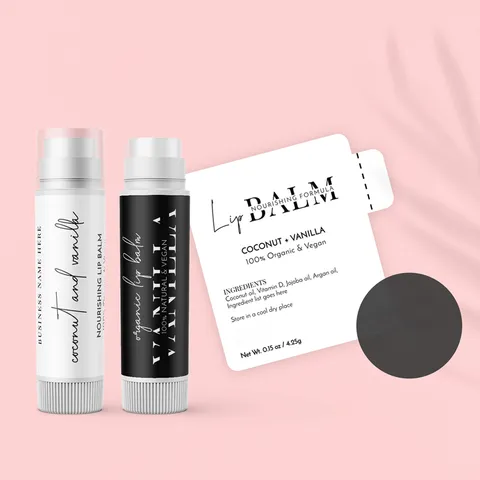
Get a written price for paper lip balm tubes
Send your dimensions, quantity and artwork status. You will get a written quote with the price at your quantity and at the next volume break, plus anything we need clarified.
Price starts from $0.30 per piece for large-volume orders. Final pricing depends on size, material, printing, and quantity.