What the format is actually made of
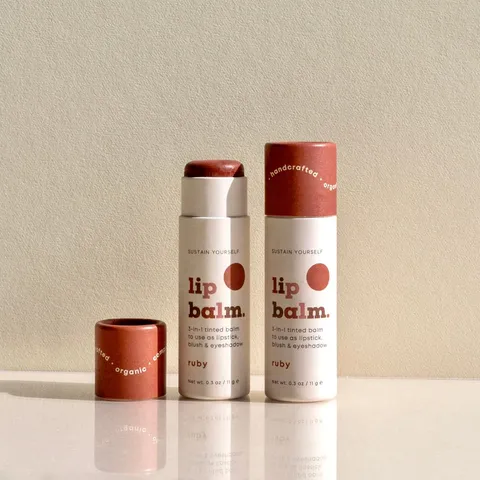
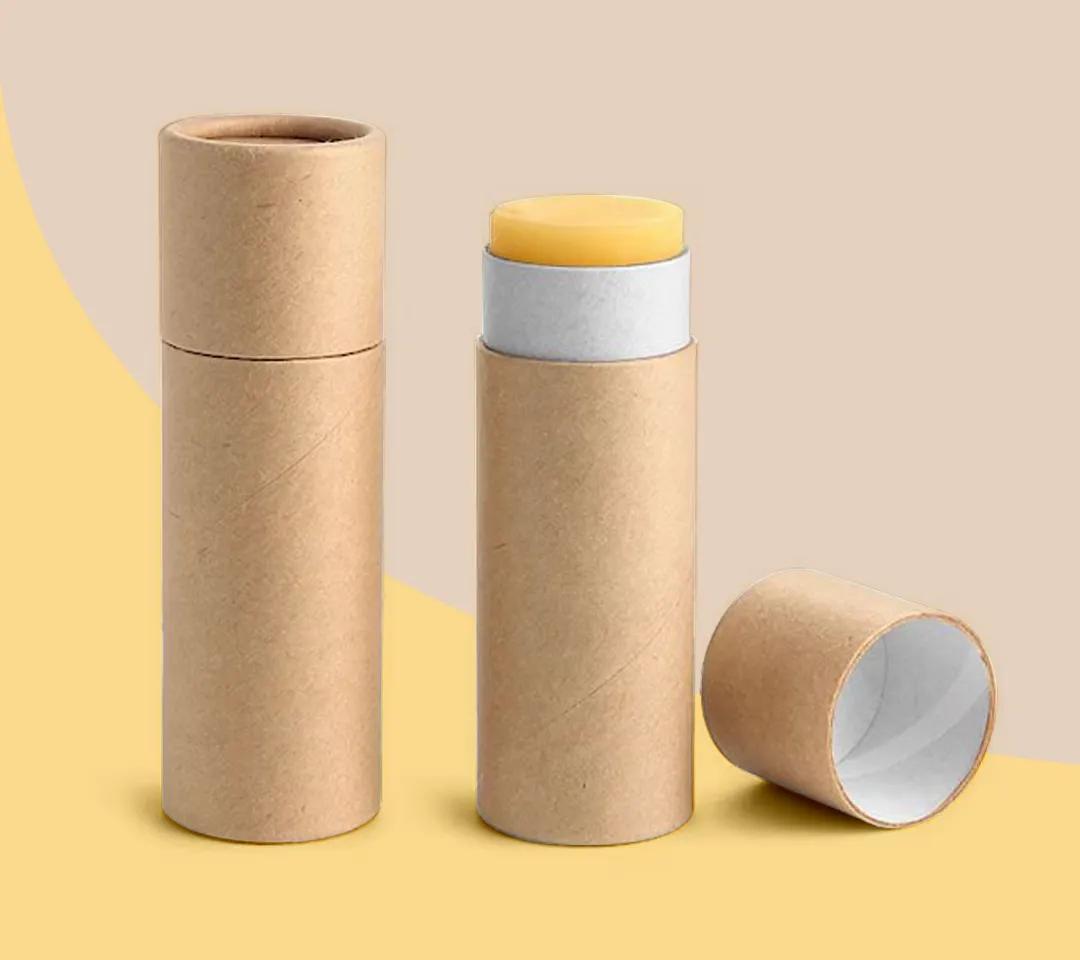
A paper lip balm tube is a rolled multi-ply paperboard cylinder with a friction-fit cap and a disc in the base that pushes the product upward. There is no threaded plastic mechanism, which is the reason brands choose it.
The layer that determines whether it works is the inner liner, which sits between the balm and the board. Its job is to stop oil migrating into the paper. Get the liner grade wrong and the tube darkens at the edges within weeks, which looks like a defect even though the tube is structurally fine.
Your formula has to suit the tube
This is the part most often skipped. Paperboard offers less thermal protection than a plastic barrel, and the liner has a finite barrier capability.
- Higher wax ratio formulas hold up considerably better. A firm beeswax and butter balm is well suited.
- Formulas high in liquid oils need a heavier barrier liner, and should be tested in a sample tube before a production run.
- Pour temperature matters: too hot and the balm wicks past the liner edge, too cool and it sets before it levels.
- Products that stay soft at room temperature are a poor fit for this format regardless of liner grade.
Filling and finishing the pack
Tubes are filled from the top with the base disc already seated, then left upright and undisturbed to cool. Most fillers settle on a pour a few degrees above the set point.
A tamper seal is worth adding. A printed paper band or a clear shrink band around the cap join gives visible evidence and stops the cap working loose in transit, and retail buyers frequently require one. If you apply the seal yourself, confirm the cap and body tolerances suit your applicator.
Storage after filling is not a detail. Paper tubes are more heat-sensitive than plastic, and a pallet stored near a warehouse ceiling in summer will show it.
Telling customers what to expect
The balm cannot be wound back down. This single fact causes most of the negative feedback that paper tubes receive, and it is entirely preventable by saying so on the pack or in the product description.
A short line such as "push up gently from the base — the balm does not retract" costs nothing and turns a perceived fault into an understood characteristic. Brands that omit it end up answering the same customer message repeatedly.
What goes around the tube
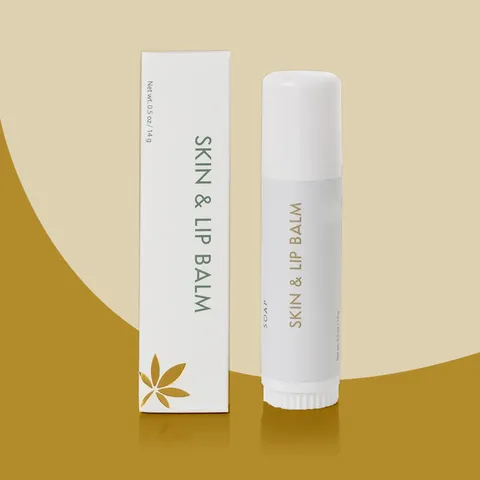
A paper tube can be sold bare, since it prints directly and needs no label. Many brands still add secondary packaging, for three reasons: retail theft prevention on small items, thermal and physical protection in transit, and space for legal copy that will not fit legibly around a small circumference.
A slim carton is the usual answer, and it can carry the ingredient declaration that the tube itself struggles to hold. Where the pack goes onto a peg fixture, a tab is added to that carton. Both are covered on our page for cartons sized to a filled balm tube.
Being accurate about the environmental claim
Paper tubes are chosen for a plastic-free story, and that story has to be stated precisely. The body, base disc and a paper cap contain no plastic. The liner is a coating, and whether a specific liner grade is compatible with standard paper recycling varies by material and by municipality.
Check two things with any supplier before writing a claim: whether the cap is genuinely paperboard rather than plastic, and exactly which liner grade is being quoted. Some suppliers pair a paper body with a plastic cap and still describe the result as plastic-free.