What an insert is actually for
An insert does two jobs, and brands usually think about only the second. The first is restraint: it stops the product moving inside the carton. The second is presentation: it controls what the customer sees when the box opens.
Restraint is the one that costs you money when it is missing. A lipstick case is dense for its size, and in a loose carton it slides under its own inertia every time the shipping case is handled. Repeated movement marks the case finish and scuffs the printed interior of the box, and the customer receives something that looks like returned stock.
When you need one
Not every pack does. These are the situations where an insert stops being optional.
- The carton holds more than one item, so the items can knock against each other.
- The product is glass, which chips at the neck when it slides in a tall carton.
- The case has a lacquered, foiled or soft-touch finish that marks easily.
- The carton was sized with generous clearance for a hand-packing line.
- The pack ships direct to consumers rather than inside a retail shipper.
- The opening moment is part of what you are selling.
The insert types compared
Cost, protection and disposal pull in different directions here.
| Insert | Protection | Cost | Disposal |
|---|---|---|---|
| Folded paperboard collar | Holds the base, stops sliding | Lowest | Paper stream with the carton |
| Die-cut card platform | Fixes position precisely | Low | Paper stream with the carton |
| Paperboard partition | Separates multiple items | Low | Paper stream with the carton |
| Moulded pulp tray | Good all-round cushioning | Moderate | Paper stream, though often not kerbside |
| Wrapped foam pad | High, conforms to shape | Moderate | Foam must be separated |
| EVA or flocked plastic tray | Highest, most premium feel | Highest | Not paper-recyclable |
Design the insert with the carton, not after it
An insert sourced separately from the carton is the classic false economy. It arrives a millimetre out, it is discovered during packing, and the choice is between forcing it and reordering.
Quoting both together means the insert is drawn to the same die line and tested in the actual carton before production. It also means one supplier owns the fit, which matters when something needs adjusting.
Ask for a structural sample with the insert in place and your actual product inside it. That is the only test that tells you whether the fit works, and it is much cheaper than finding out on a full run.
Inserts in rigid boxes
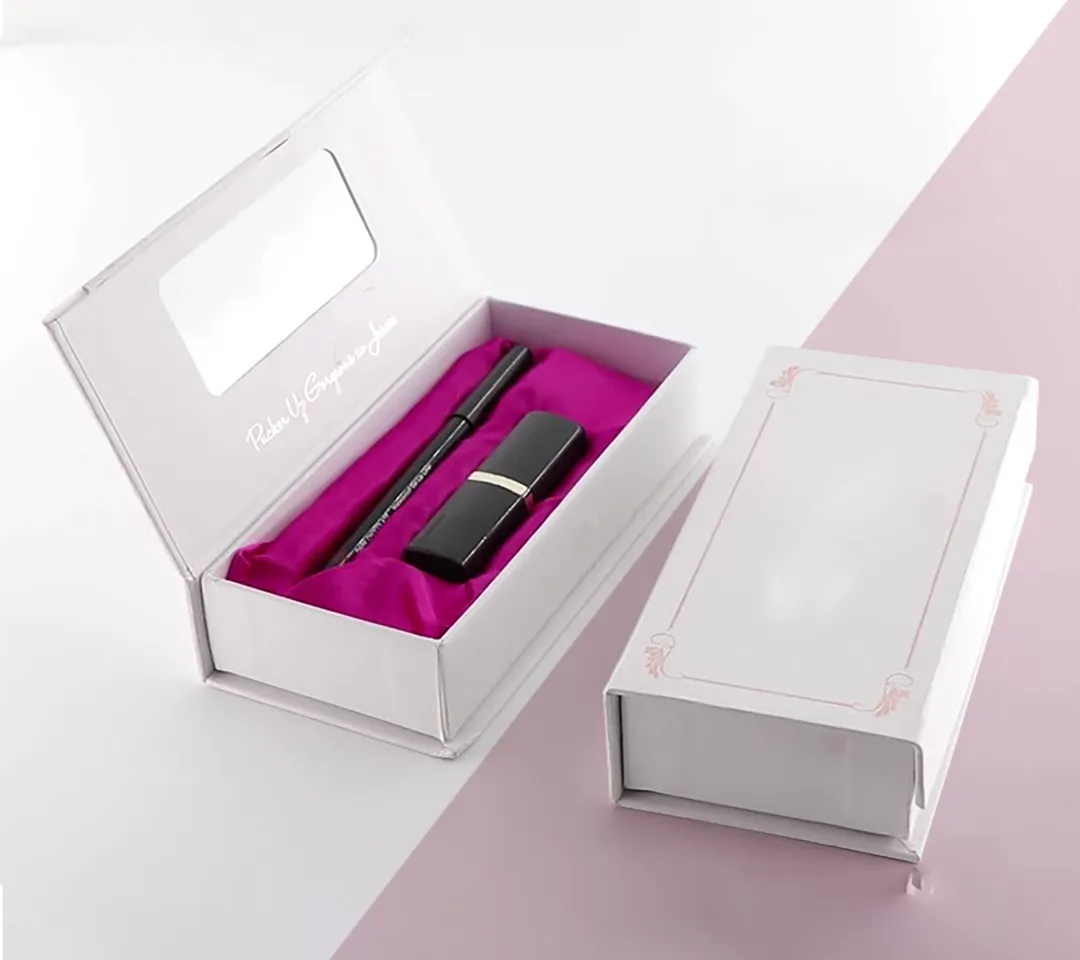
In a rigid box the insert does proportionally more of the work, because the whole point of the format is the moment the lid lifts. A tray that presents the bullet at a slight angle, in a recess lined to contrast with the wrap, is doing brand communication as much as protection.
The trade-off is materials. Satin, velvet and flocked trays give the deepest luxury read and add components that will not recycle with the board. A die-cut card platform in a contrasting printed paper achieves a considerable amount of the same effect while keeping the pack closer to a single stream, and that balance is discussed on our page on wrapped rigid construction.